
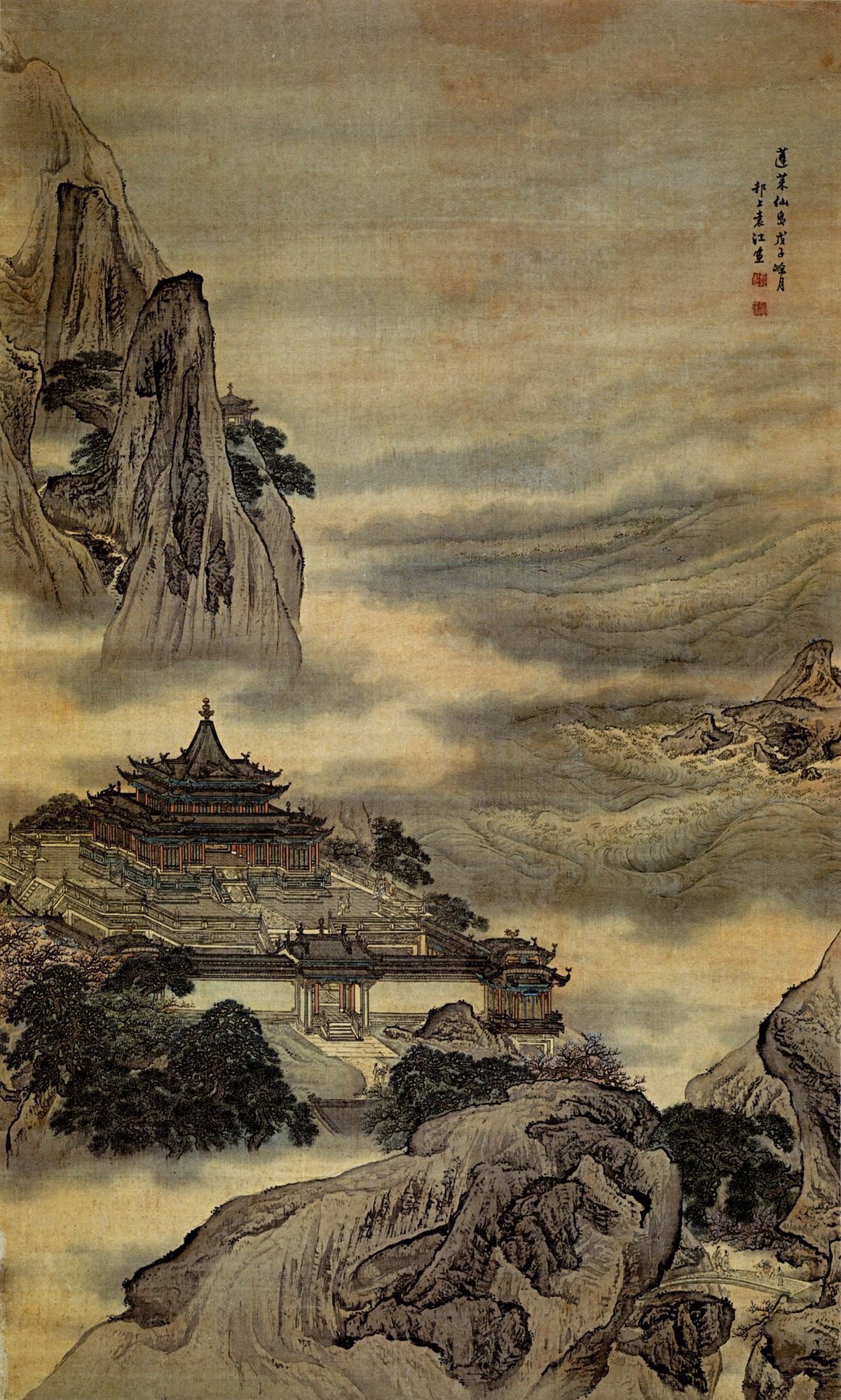
Spatializing the invisible
Feng Shui is the study and understanding of visible and invisible influences of the natural environment, and urban living spaces - houses, buildings - that affect people at all levels of health, relationship, success, money...
Mastery of these influences allows us to design places and living environments that promote the harmonious expression of life in all its forms. Through Feng Shui, we can place and orient, build and arrange, adjust ... living spaces, workplaces, neighborhoods, cities.
Vector of an authentic eco-friendly approach
Feng Shui tends to make the irrational more rational, the elusive more comprehensible, the inexplicable more explicable, the invisible more visible. The Feng Shui master reads the landscape like an open book to profoundly understands it. The imagination does the rest and at good territorial scale, expresses its singularity.
Knowledge of the "genius loci", the protective spirit of the place, goes through observation and analysis, from geology, history and almost forgotten "sciences". Beyond rational explanation, what counts is the confidence in an empirical, experimental processes, with proven results, conducted since 3000 years.
Back to origins
As a Taoist science, Feng Shui appeared in China nearly 3000 years ago during the Zhou Dynasty. Though, the application to the study of landscape and housing is more recent. Oldest written traces (Gui Gu Zi and Zhang Liang) data back to the end of the Zhou dynasty, during the Warring States period (453 B.C. to 221 B.C.) Then called Kan Yu (堪舆, way of Heaven and way of Earth), it was mainly used to analyze the natural environment in order to select the best locations (dragon nest) to build cities, palaces and tombs.
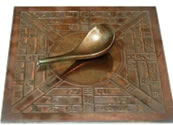
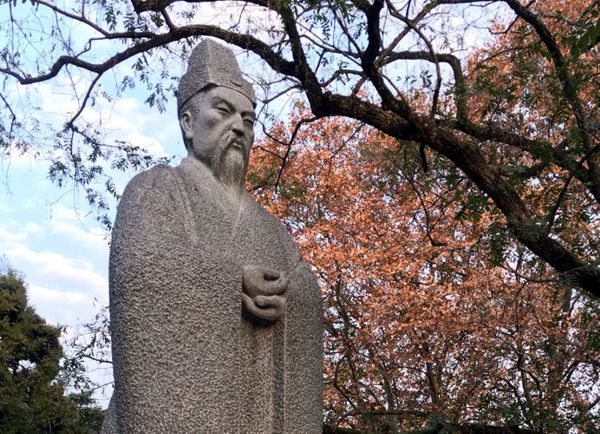
The term "Feng Shui" (风水, Wind and Water) will appear only later, during the Jin Dynasty, in the writings of Master Guo Pu (276-324). In this early period of history, Taoist scholars were well aware that the living conditions of communities were closely related to the configurations of the landscape around them.
Proximity to water and weather conditions were not sufficient to explain the survival and prosperity of these communities or, conversely, their problems, their decline, until their disappearance. They then extended their analysis to the shapes of the environment, mountains, rivers, water points, and most importantly, the relative position of individuals with regard to these formations.
Feng Shui: another view of the world
Feng Shui transforms the perception of our living environment through the awareness of the intimate, powerful and subtle relationship between human beings and nature, within each living space. It is a complex system of methods that rely on the fundamental principles of Taoist ancestral thought.
The objective is to achieve physical, moral and intellectual fullness by acting on the construction and judicious arrangement of our living spaces. More concretely, we seek to best capture and channel the Qi from the external environment into our living spaces.
Receiving and channeling the Breath of Life
Qi is the invisible vital energy that exists and circulates in nature and in the human being. The relationship between environmental Qi and people's Qi conditions their harmony, their health, their prosperity. In a way, Feng Shui reconciles the man with himself and induces a healthier and more responsible attitude to his requirements.
According Feng Shui's philosophy, everything is connected: life, behavior is a reflection of the habitat. Making a change to architecture or layout will affect people. The opposite is also true, without any significant change in the living space, no change in the course of life ...
Practicing Feng Shui is above all a deep reflection and introspection. Ideally, we should have a complete overview, a journey to the heart of his universe. According to our desires and what we wish to improve, the approach will be different. A Feng Shui approach must answer an essential question: what do we want to change?
A matter for specialists
Feng Shui advice necessarily arises from a precise and personalized diagnosis. Many parameters must be taken into consideration by the specialist who establishes a unique analysis grid for each case and equally unique recommendations.
Feng Shui is a matter for professionals. Only proven consultants with a reliable background, trained and certified by a true master, can practice it efficiently, in compliance with the rules of practice and ethics enacted by the long lineages of masters.
Feng Shui for businesses
If, for centuries, taoists sciences such as Feng Shui, have helped supporting and improving the lives of individuals, they apply just as long to organizations in which individuals are the fundamental resource. Knowing that business success is based on the well-being of individuals is an essential element, knowing how to ensure this well-being is the key.
Rather unconventional in businesses, Feng Shui yet achieves undeniable results in terms of success. Improving the quality of life on the workplace brings an obvious noticeable increase of productivity and hence profitability.
Just by assuming a decrease in absenteeism by a third, we can assess the significant impact that Feng Shui may have on a company results.
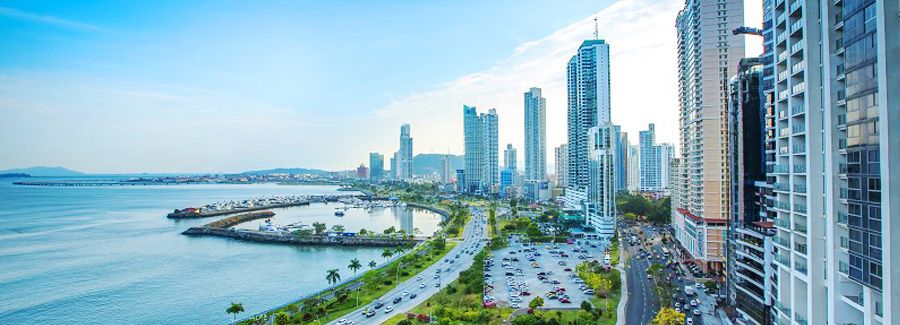
Scope of Feng Shui in businesses
y the analysis of the external business environment, it optimizes the beneficial influences and channels them so that they optimally irrigate the interior space. It therefore aims at improving the relationship between humans and their environment, which they are also part of and, in their turn, they interfere with the quality of internal life.
The location determines the energy quality of the interior space. Feng Shui allows us to experience the best environmental contributions while effectively protecting from everything that could be a source of unrest, disturbances, agitations, damaging influences...
Following a strong principle of consistency, external influences are deeply activated in interior spatial organization. The choice of locations and orientations is strategic. The spatial distribution of different functions, and people, actively contributes to qi (氣) circulation, caught from outside, without omitting arrangement of exchange places, of active emptiness, which create the movement in the heart of the company.
Fluid spaces are used to fairly distribute each person in the space, according to their function - director, officer, employee, supplier and customer. Thus, well directed, the beneficial forces animate, combine, interact and increase business results.
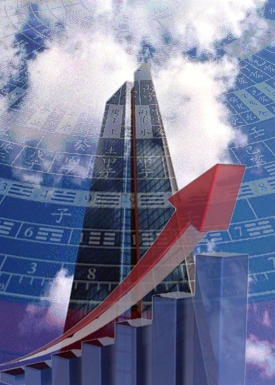
What change with Feng Shui in businesses
Better relationships between managers and employees and between employees;
More harmonized work environment: more serene atmosphere, better team building, stress reduction, lower absenteeism;
Boosted productivity: clearer minds, creativity, better individual and collective dynamism and fluidity in the distribution of tasks and people;
Net increase of turnover: 20%, 30%, 50% ...! of profits and profitability; of the company value and its operations;
Amplified communication: good radiant innovative brand image; strong reputation of the company..
Feng Shui and business strategy
Feng Shui is not only about space. In the Taoist tradition, space is not separated from time as shows the evidence of day and night alternation, the seasons change and the annual cycles that each individual life follows from birth to childhood, adulthood, old age and until death...
Space and time are inextricably associated. Same is true for that other living organism - the company - whose strategy is to plan the future with confidence.
To favorably fit to this spatio-temporal constantly changing environment, the company must evolve, to not only track the movement, but also to be the movement.
Taoist disciplines have developed techniques - ba zi (八字), yi jing (易經)... - to clearly identify the specific spatio-temporal characteristics of each individual, and then condense them in the form of potential assets that can be activated as an effective aid to analyze situations and ask relevant decision-making questions.
Feng Shui for real estate investments
Guaranteeing quality of life, harmony between people and business success, Feng Shui naturally fits to the development or acquisition of investment property, residential properties, investment properties, industrial sites or business center.
Properties that benefit from good Feng Shui, concerning their location, their architecture and their facilities are remarkably "healthier", more appreciated, more sought after, more profitable and therefore more easily valorized.
Rental properties perform better because they have a lower turnover and a better regularity for payment of rents. The properties have a better reputation in terms of the quality of life flowing therethrough.
Companies are more profitable, they have a better image, a lower level of stress, a lower absenteeism and their management is more efficient.
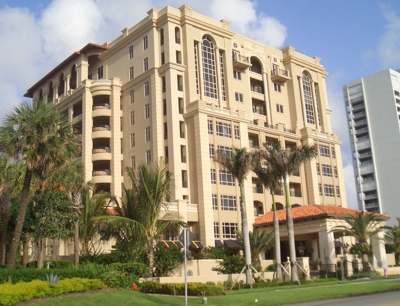
Meanwhile, as this can often be observed, places enjoying good Feng Shui conditions are more resistant to weather, to time and to any form of damage. They are therefore relatively inexpensive at maintenance. The benefits that we can get from Feng Shui therefore go beyond the places where we live and where we work. They also extend to property in which we invest by optimizing their performance and value.